
Porridge Bread
GRAIN ON GRAIN. BREAD WITH MORE BREAD.
WHY YOU’LL LOVE IT
🍞 Bread With More Bread In It
We found a way to add more grain into grain.
🌾 Ancient Grains
Kamut, einkorn, and oats—freshly cracked, fermented, and folded into the dough.
✨ Velvety Crumb
Denser than our other loaves, but still soft and tender.
👃 Super Aromatic
If you love the smell of fresh bread, this one’s for you.
THE STORY
We first encountered porridge bread in Chad Robertson's Tartine Bread No. 3, and its approach inspired us. We believe grain is flavor (specifically, the harmonious balancing of different varieties) and the porridge bread technique lets you pack even more grain, and thus flavor, into a sourdough loaf.
Basically, you take a nearly finished bread dough, and fold cooked, freshly cracked grain into it. It's like using stock to make fortified stock—putting the same thing into the same thing to produce an intensified new version.
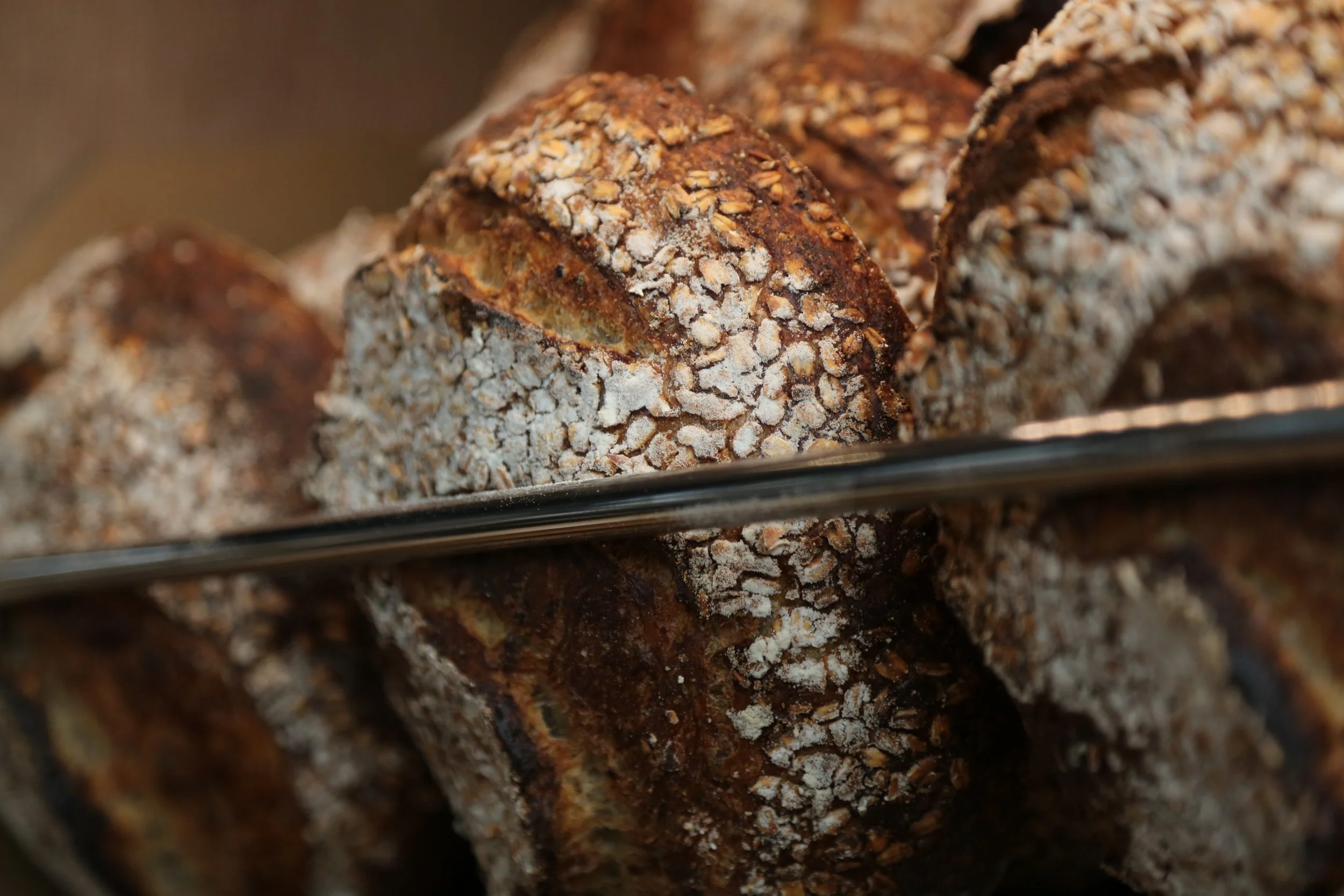
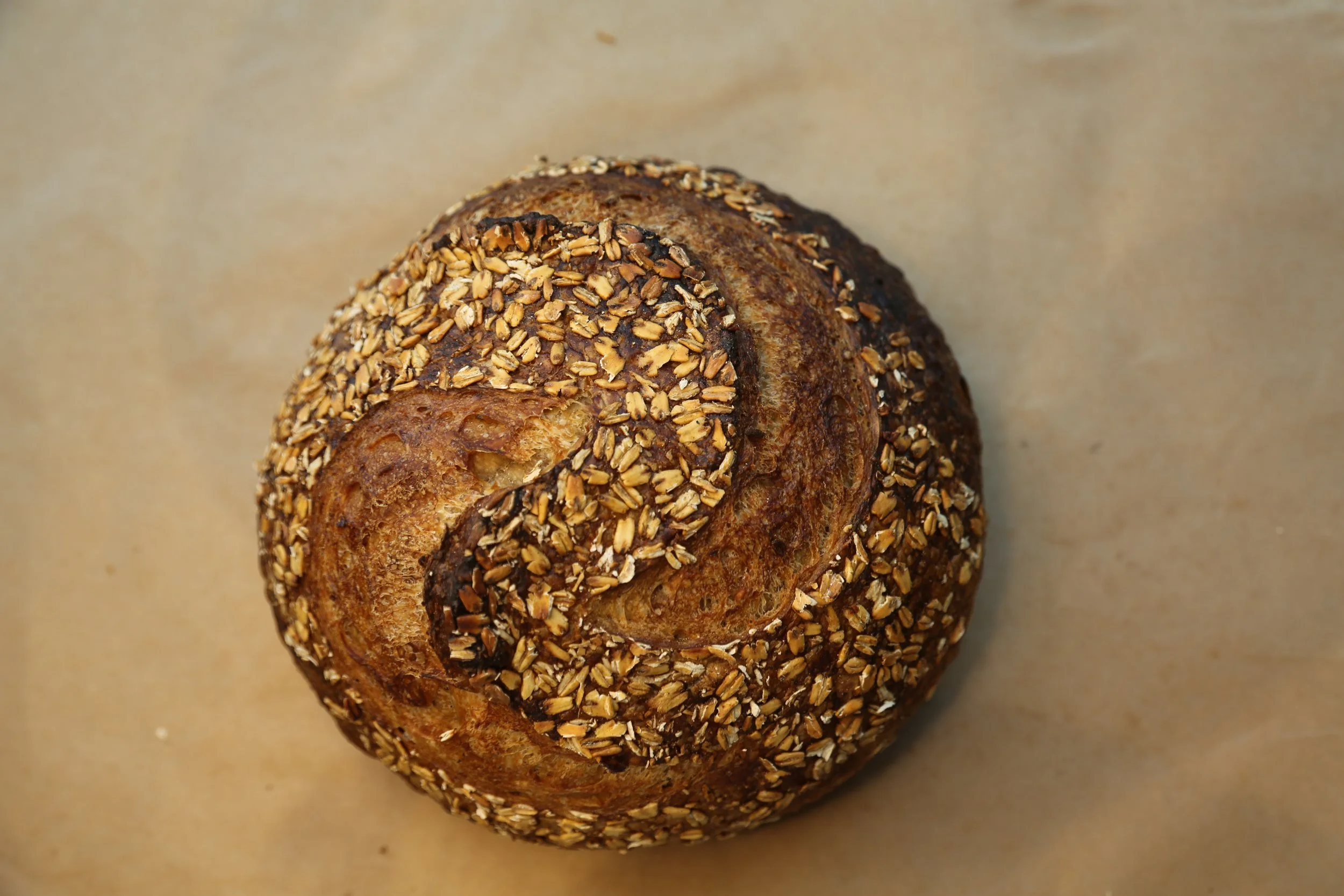
We tested it in the bakery two or three times, and it worked almost immediately. (Few experiments do; some don’t work at all!) The crumb came out beautifully, the crust had a rustic appeal with oats scattered on top, and the flavor was unlike anything else we bake.
So we kept it.
WHY WE MAKE IT
We get asked all the time: are you going to make an olive bread? A cheese bread? A jalapeño bread? The answer is always a polite no. Because all of those things can go on the bread after it's baked. The only thing that should go into the bread is grain.
That's what the Porridge Bread is about. Instead of adding something external, we double down. More grain. More flavor. More of what bread is actually made of.
Grain is flavor. It's the taste of the rich minerals that come directly from the earth. It has been sustaining our civilization for thousands of years. Aromatic, complex, and, when treated with care, genuinely beautiful.
The Porridge Bread is our way of saying: this is what we believe bread should be about.
FLAVOR PROFILE & CRAFT
The grains—kamut (also known as khorasan), einkorn, and oats—are cracked fresh in the bakery. They soak in water, where a light fermentation begins almost immediately: natural microorganisms start breaking down sugars, and the starchy liquid becomes infused with flavor. Then they're cooked in a pressure cooker, in the same water they soaked in, and cooled overnight.
The next day, the cold porridge gets folded into a fully-developed dough that, without the porridge, becomes our San Francisco loaf. The porridge adds a lot of moisture, so flour and water have to be adjusted on the fly. The dough then gets re-mixed in precise intervals, to avoid overworking the gluten that's already been developed into something tough and lifeless.
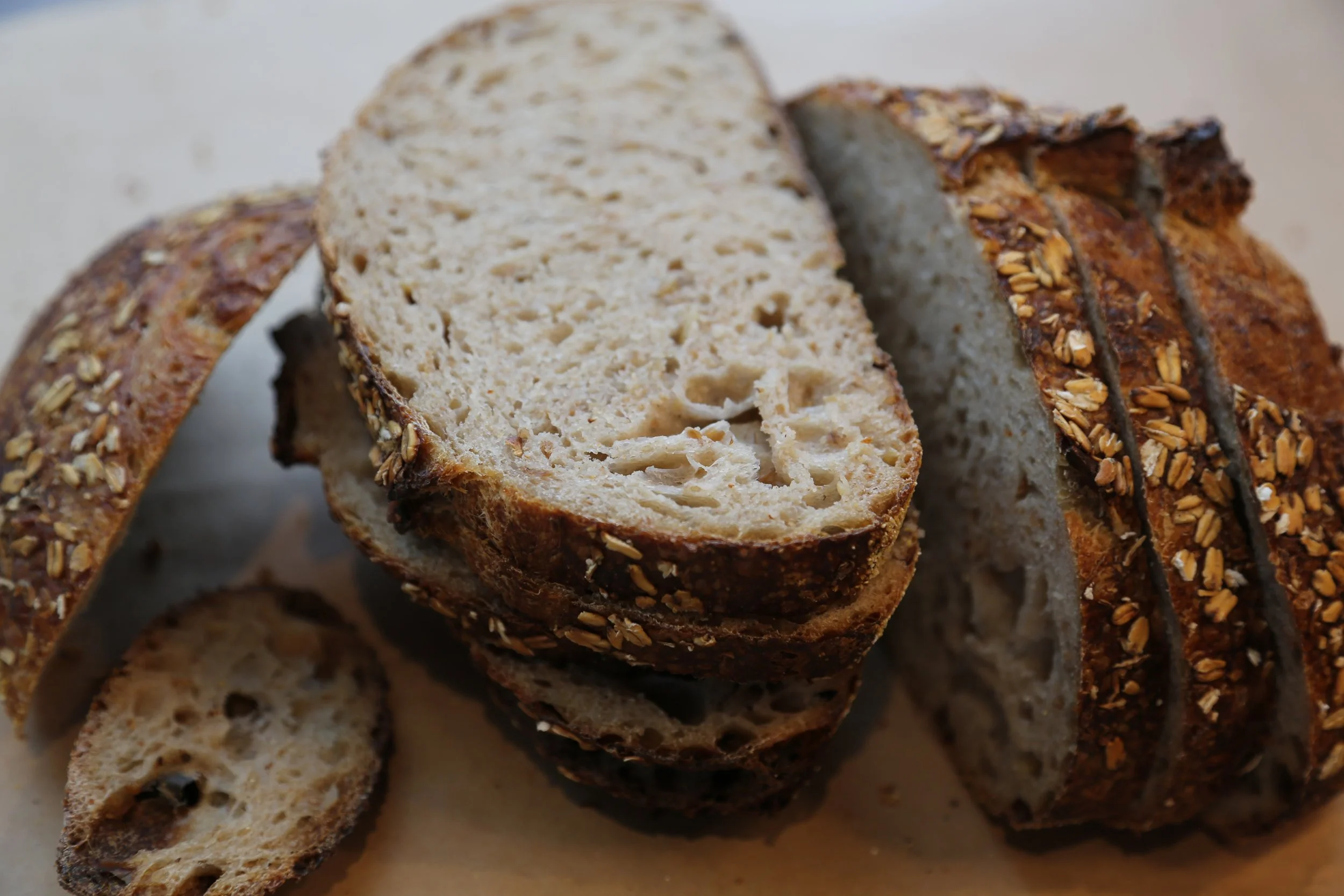
It's a technically demanding process. But that added moisture, and the gelatinized starches from the cooked grain, tenderize the crumb until it's almost velvety.
There's another benefit: when you tear open a loaf, you get an intense rush of grain aroma—all that extra flavor, concentrated and released the moment you break the crust.
HOW TO EAT IT
The Porridge Bread is sturdy enough to build on, but flavorful enough to eat with almost nothing. A few places to start:
Runny eggs and flaky salt — Toast a slice, top with a fried or soft-poached egg, and let the velvety crumb soak up the yolk.
Smoked fish — The earthy depth of the ancient grains stands up to smoked salmon or trout without competing. A little crème fraîche if you're feeling fancy.
Honey and butter — Simple, but the honey amplifies the malty sweetness already hiding in the kamut and einkorn.
Tahini and date syrup — Grain meets sesame meets caramel. Finish with a pinch of flaky salt.
HOW TO STORE IT
Our Porridge Bread is at its best the day it's baked. (If you can wait until day two to slice into it, it might be even better.) Once cut into, it’s good for at least another 2-3 days, thanks to all of the extra moisture in it. Store it cut-side-down on the cutting board, or bag it in plastic and toast when needed.
It also freezes exceptionally well, sliced or whole. Reheat it and proceed with the section above.
WHERE TO BUY IT
You can find Porridge Bread Wednesday-Sunday at our bakery at 685 Grand Avenue in St. Paul; on DoorDash; on Uber Eats; or at one of our neighborhood pickup locations in North Minneapolis (Wednesday), Minnetonka (Thursday) or St. Louis Park (Friday).