
Challah
A CELEBRATORY LOAF FOR THE END OF THE WEEK
WHY YOU’LL LOVE IT
🤚 Braided by hand Limited quantities, individually shaped, no two exactly the same.
✨ Yes, it’s sourdough A soft, sweet loaf that happens to be naturally leavened.
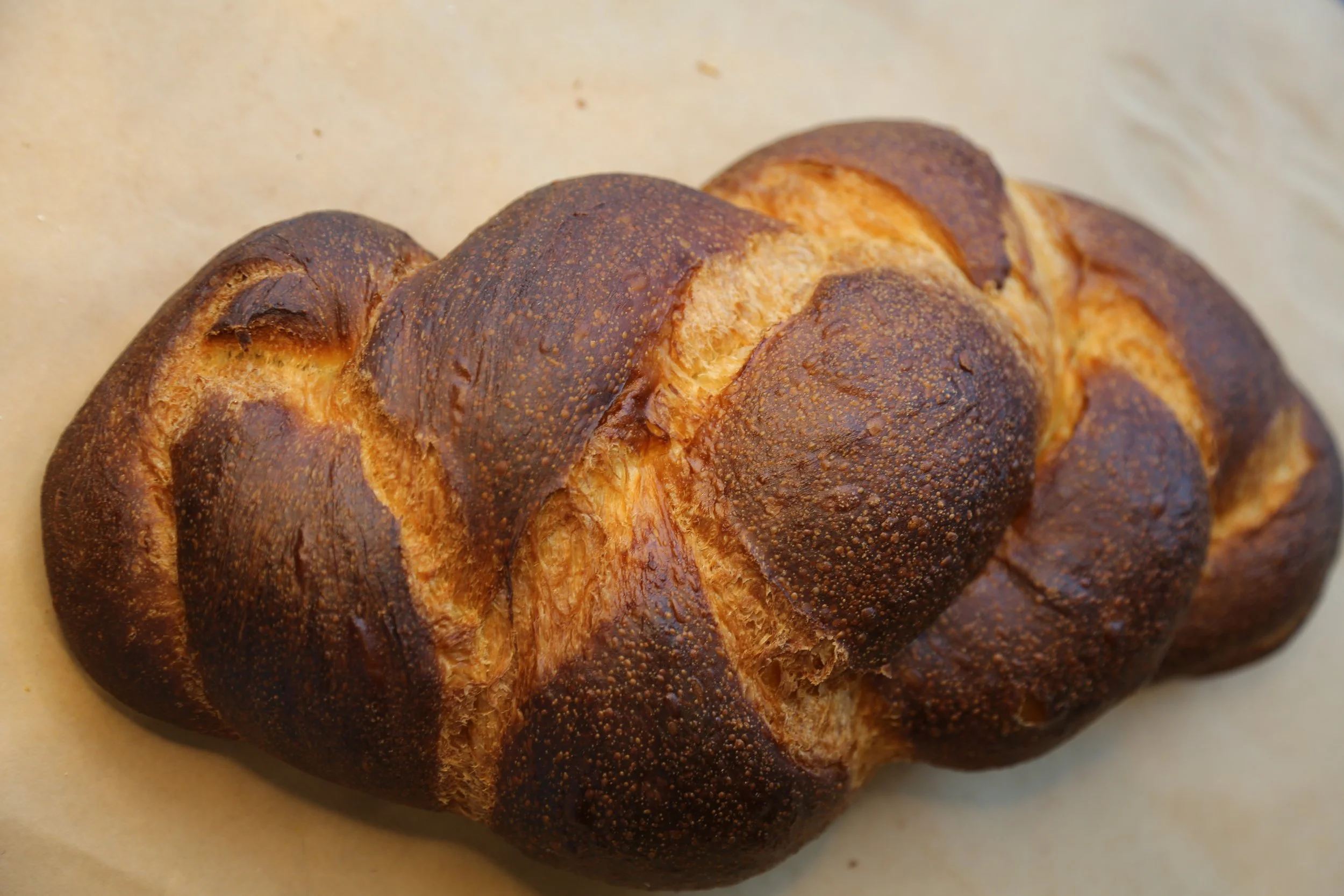
🔥 Silky crumb, dark crust We bake ours darker than most because that's where the flavor is.
📅 Stays good all weekend Just in case you have any left after Friday night.
THE STORY
Every baking tradition has a celebratory loaf. In France, it's brioche. In Italy, panettone. In Germany, stollen. They all predate commercial yeast. They were all, originally, sourdough. The best ones still are.
Challah is the Jewish version of this enriched-dough tradition, and the rules were almost identical, with one important constraint: no butter. If the bread was going to sit on the same table as meat, dairy couldn't touch it.
So where French bakers reached for butter, Jewish bakers reached for eggs, sugar, oil, and the whitest flour they could get their hands on. White flour was expensive — that's what made it special. That's what made it Shabbat bread.
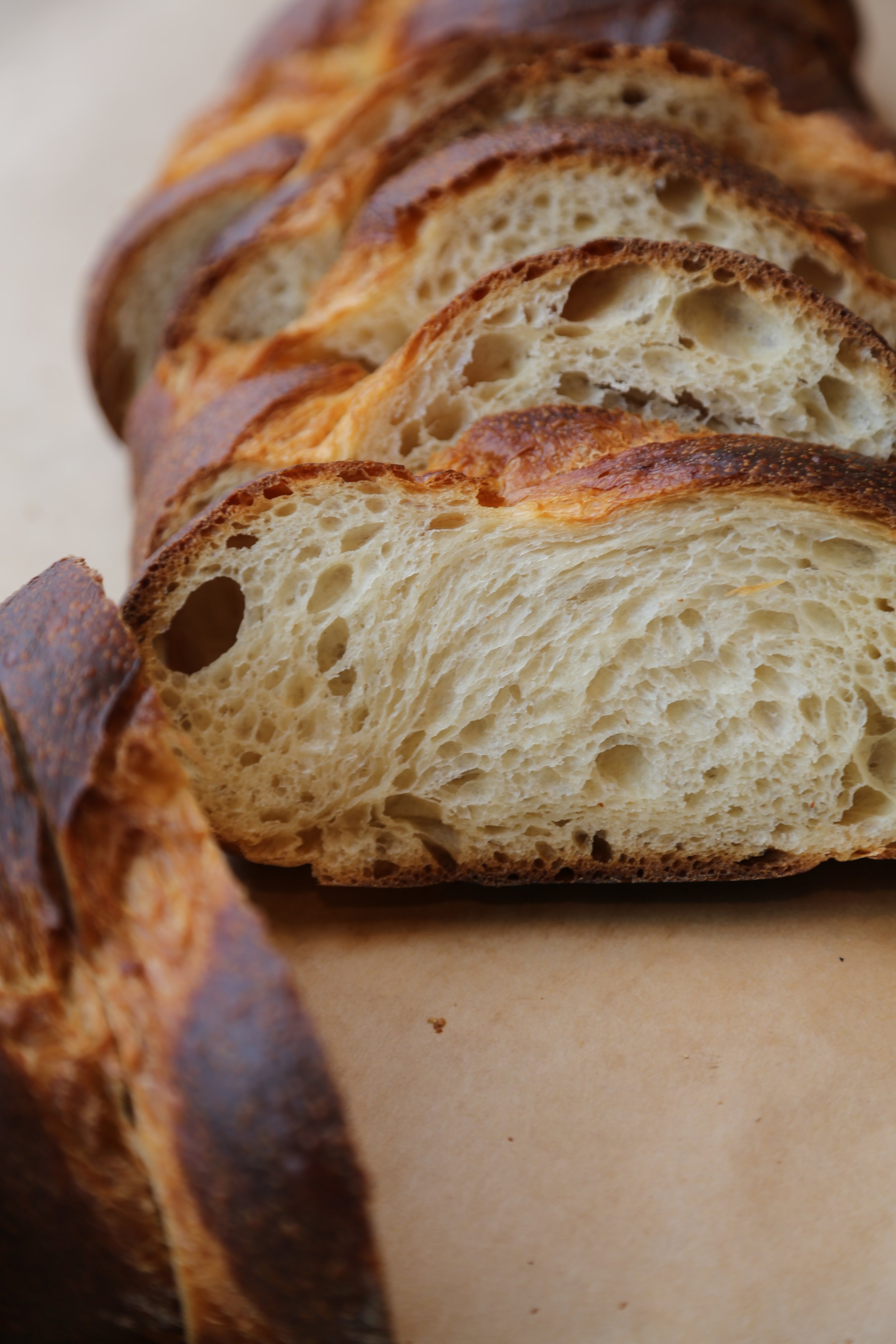
We approached our challah the way an Italian baker approaches panettone: push the hydration as high as the dough can handle; and let the fermentation do the work. The result is richer and silkier than a conventional challah, with a depth of flavor you could never achieve with the faster fermentation time of commercial yeast.
We like to think of it as the second best Challah around — after the one your [insert cherished relative here] makes.
WHY WE MAKE IT
Well, as a kosher bakery, it would be kind of weird if we didn’t.
But challah is an important showcase for some of our most deeply held baking principles.
Most people hear "sourdough" and picture something tangy and crusty with a chewy crumb. Our challah is soft, sweet, braided, and has zero tang. Sourdough is a process, not a product, and challah is the bread that demonstrates it more plainly than anything else in the bakery. (Indeed, if the challah you get from us is actually sour, we want to know about it!)
You'll also notice our challah is darker than what you're used to.
There’s absolutely nothing wrong with a light-golden challah—it’s the one we great up eating! But the caramelization in a well-baked crust is where the sweetness of an enriched dough actually gets to perform. We let ours go longer, because we think it’s better.
FLAVOR PROFILE & CRAFT
A standard challah runs around 60 percent hydration. Ours is in the mid 70s — closer to panettone territory.
(For the bread nerds: We actually explored using a classic Italian lievito madre early on, but a multi-day feeding schedule didn't make sense in a production calendar built around making challah once a week.)
We use a scald: A portion of the flour cooked with boiling water before it's added to the mix, the same technique we use for the Pain de Mie and our bagels.
It lets the dough hold more water without going slack, and it's responsible for that silky quality in the crumb, and the prolonged shelf-life. We also add eggs,sugar and oil, but of course no butter.
Then there's the bake. The internal temperature of bread generally plateaus around 200 degrees, no matter how long it stays in the oven. The crust is an insulator. You're not overcooking the crumb by going darker. You're developing the surface into its own flavor layer: Maillard reaction, caramelization, the chemistry that turns a golden crust into a deeply sweet one.
The dark bake creates a challah with two distinct flavor personalities: a crust that’s all sweetness, and a crumb with genuine complexity from the long fermentation.
HOW TO EAT IT
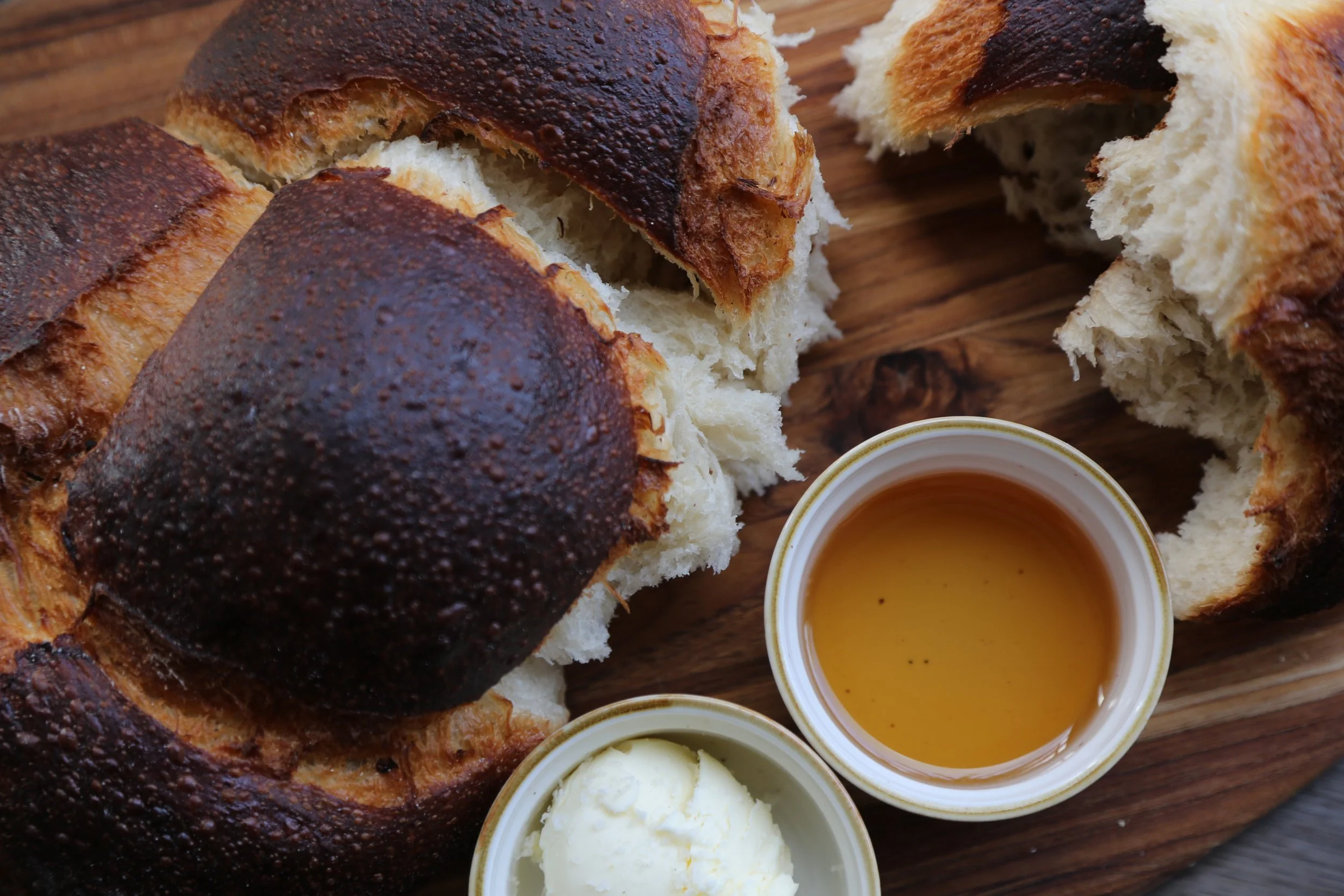
Torn by hand. Rip it apart at the table while it's fresh, and dip the hunks in flaky salt.
French toast. The high-hydration, egg-enriched crumb soaks up a custard without falling apart, and there's enough built-in sweetness that you can ease off the sugar in the batter.
Tuna melt. Tuna salad, melted cheese, Challah in a hot pan. A diner classic that gets noticeably better on better bread.
With shakshuka. Tear it into chunks and dunk them in the gravy. The crumb absorbs the sauce without dissolving, and the sweetness against tomato and spice is chef’s kiss.
HOW TO STORE IT
A bread box is the ideal place to store a loaf when you want to preserve the integrity of the crust and the crumb. If you don’t have one, a plastic bag works too. For longer, wrap it tight and freeze it whole. Then just leave it to thaw on the counter for a few hours.
WHERE TO BUY IT
You can find Challah on Friday at our bakery at 685 Grand Avenue in St. Paul; on DoorDash; on Uber Eats; or our neighborhood pickup location in St. Louis Park.