
Why We Bake Dark
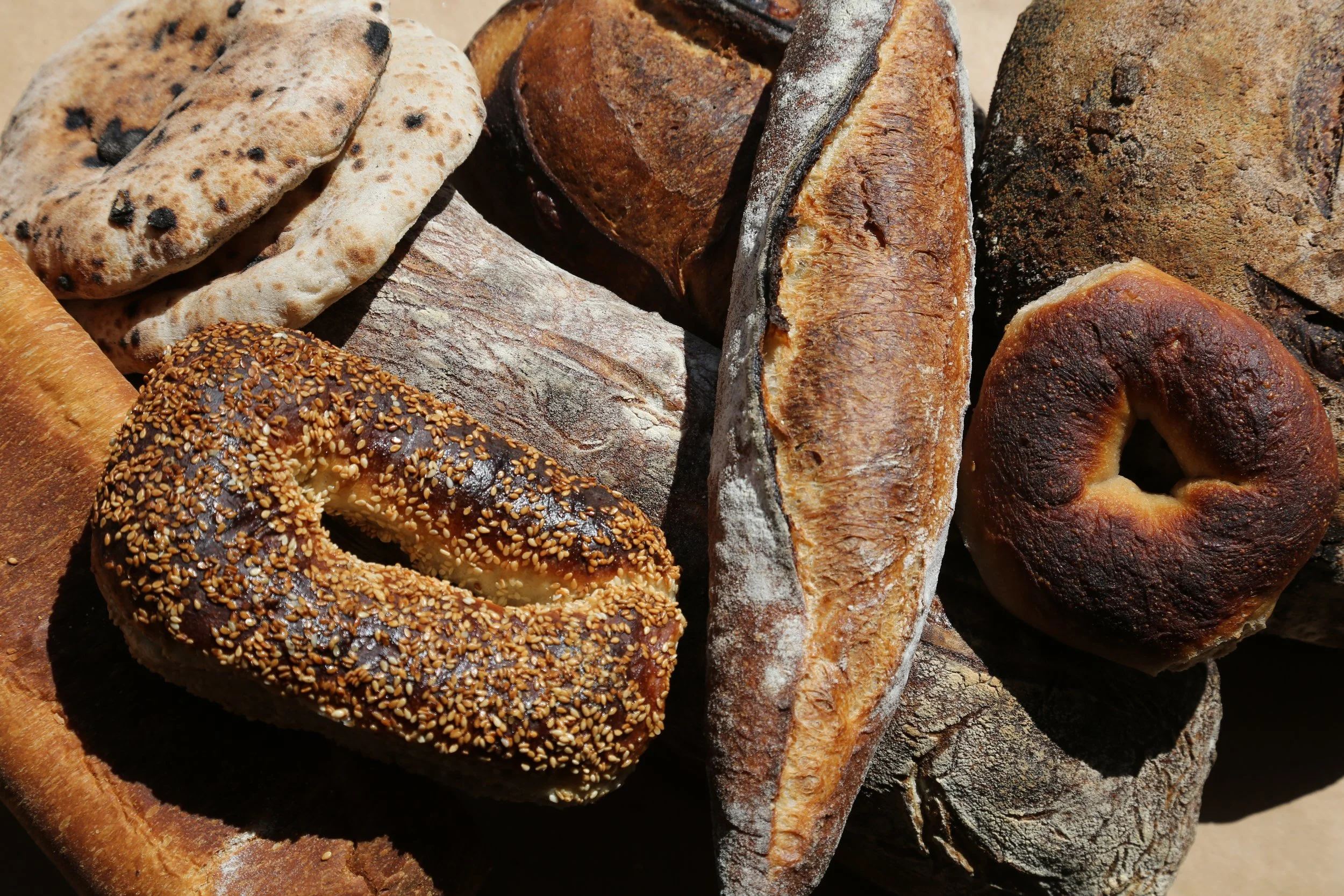
Bread is grain put through fermentation and fire. We believe it should taste like it.
That’s the reason the bread on our bread wall looks the way it does. And why, sooner or later, somebody at the counter asks some version of: "Are the loaves looking a little dark today?"
Fair question. Here’s the short answer: We bake our loaves dark because we think it’s better that way.
Admittedly, it’s not black and white (or, black and brown and gold and copper, like our best breads). There’s a whole spectrum that comes across in every bake and we accept that people have different preferences. If we believe a loaf of bread is genuinely burnt, we won’t put it on the shelf. And if you prefer your loaf to be baked on the lighter side of dark, we’re happy to select one that looks best to you.
That said, color is flavor. And the real question we ask ourselves is, why is everyone else’s bread so pale?
The cult of soft
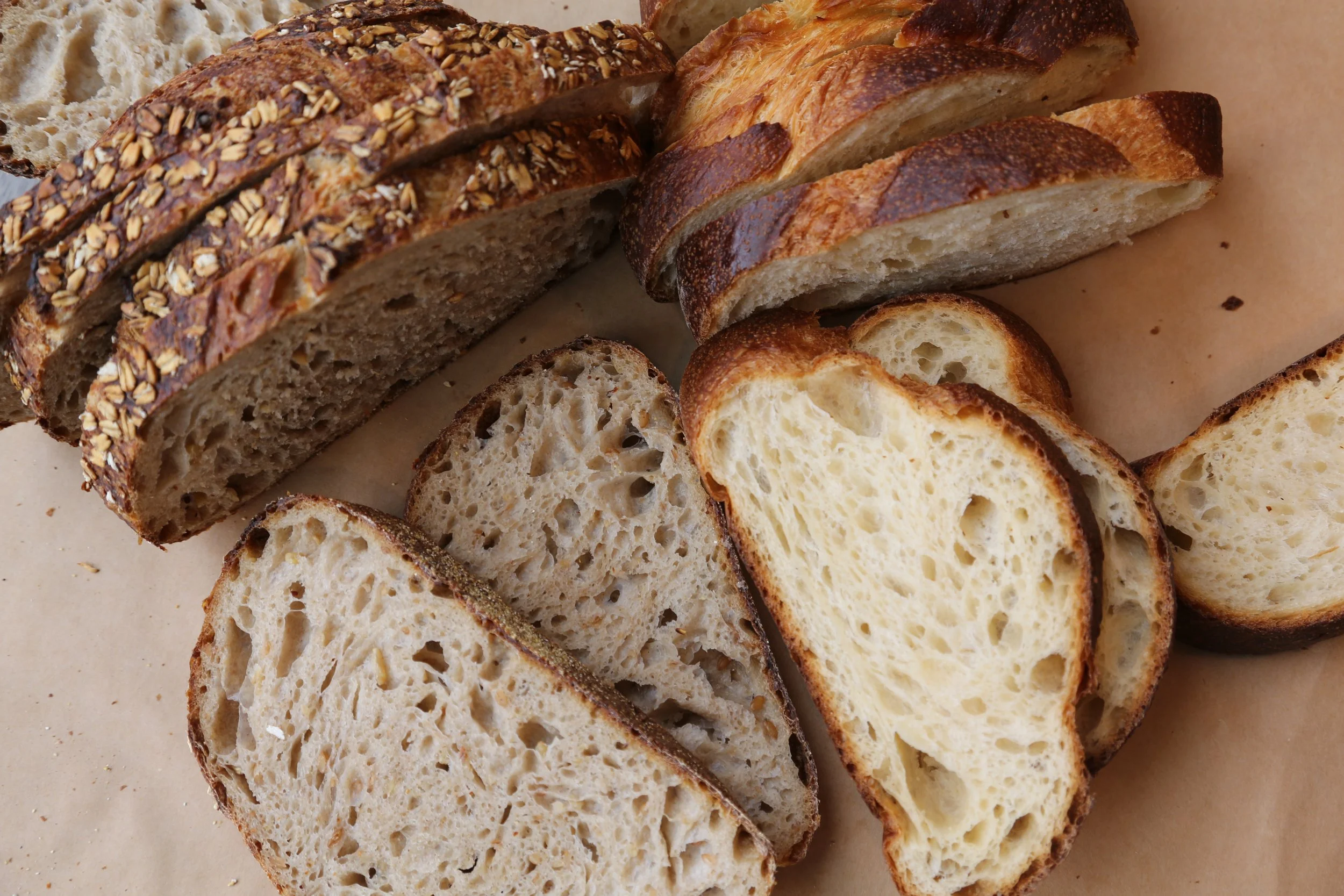
Somewhere along the way we started worshipping the wrong things in bread. Softness. Squish. A pale, clean, inoffensive crust that asks nothing of you. We learned to pick up a loaf, squeeze it, and call it good if it gives.
Look at a standard challah: blonde and lacquered and glossy; not burnished and deep. Same bread, two completely different convictions about what the oven is for. Because pale is choosing speed over flavor.
A bakery in a hurry is in a hurry at every step. It pushes the dough fast on a big slug of commercial yeast instead of giving it the long, slow ferment that actually builds flavor, and then it yanks the loaf out the moment it's technically bread and reloads the oven to do it again. We let the dough take the hours it needs, and then we actually leave the loaf in the oven until it reaches its full flavor potential.
DARK OUTSIDE, SOFT INSIDE
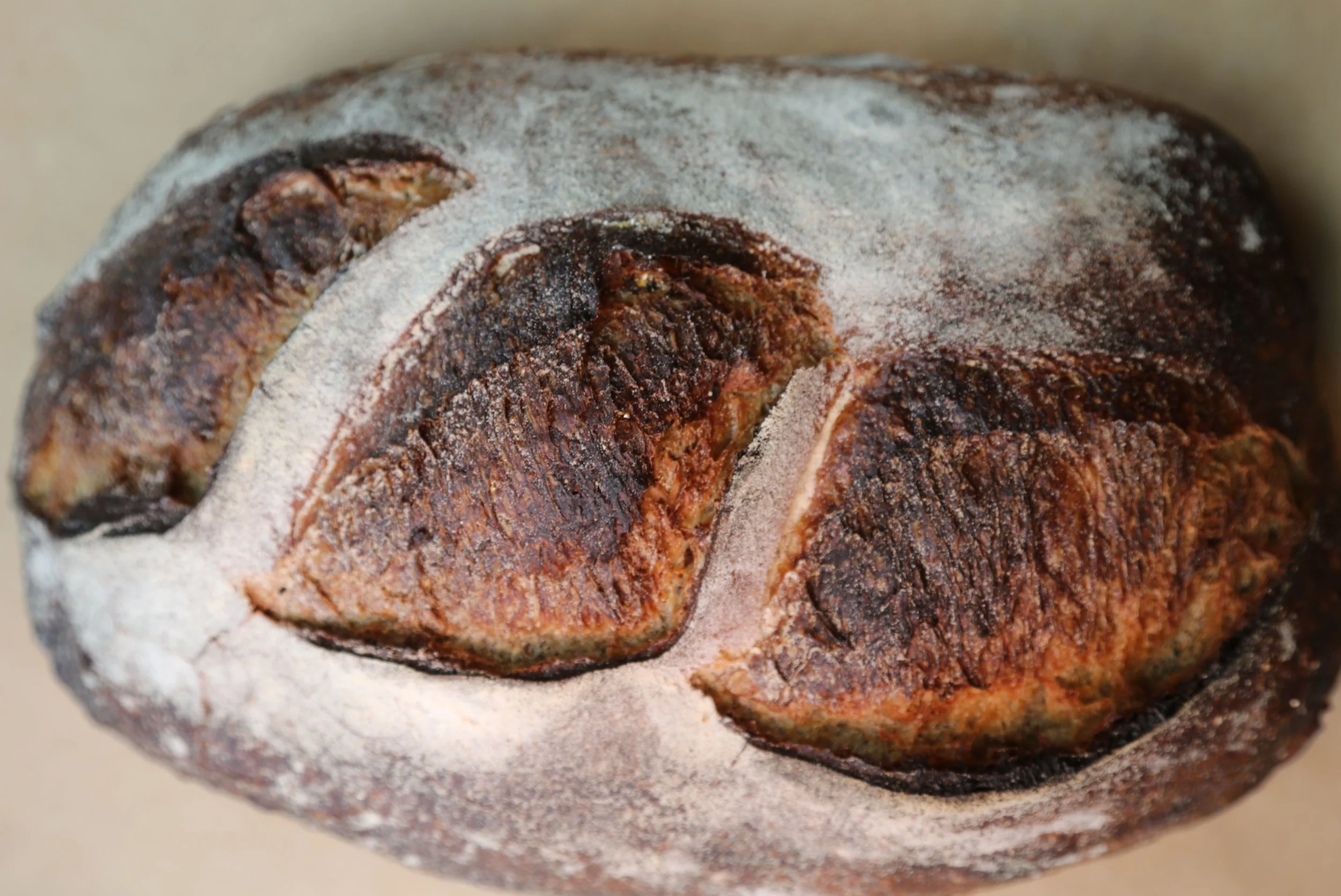
So we leave it in longer, the crust goes dark, and everyone assumes that the inside must be dry, scorched, and overdone. But the transformation from dough to bread is a lot more complex than simply moisture leaving the dough. The crust acts as an insulator. Once the inside of the loaf comes up to around 200 degrees, it stops climbing. At this point the crumb has 'set', and you can take the crust a long way without any concern about the crumb losing its desired character.
The result is a crust that is, well, crusty and expressive, which is exactly how we like it. (It’s only when ‘crusty’ becomes ‘abrasive’ that we would have second thoughts.) Because a dark, crusty exterior and a tender, open crumb together are what a finished loaf is.
And they do two different jobs. If you want to taste the acidity, take a bite of the crumb; if you want the sweetness, take a bite of the crust; if you want them to work together, take a bite of both. The tangy inside is half of it, the dark sweet crust is the other half, and neither one is the finished loaf on its own.
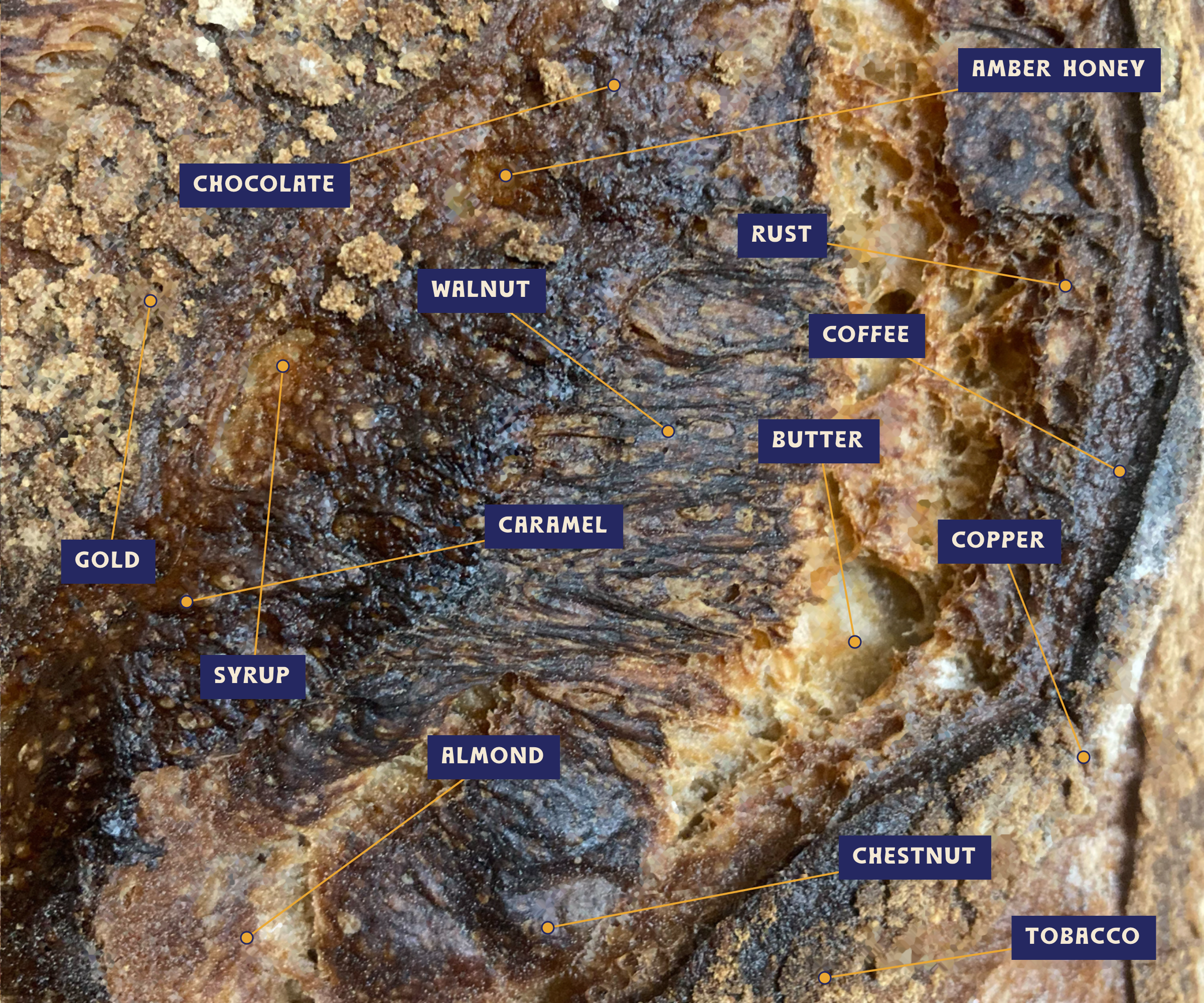
Yes, we really do have names for all of these colors.
WHERE THE LINE IS
So where does dark end and burnt begin? We'll be straight: it's partly a know-it-when-you-see-it thing. But we push the limit on purpose, and the only way to know where an edge is, is to step over it now and then. (Don't try this with real cliffs.)
Most bakeries never find that edge because they never go near it and probably don’t have any interest in it; we live right up against it because we want to push the envelope.
And what reads as "burnt" to a passing eye is, to us, a vocabulary. There isn't one brown — there's a whole range across a single loaf: dusted gold down in the score valleys, amber and caramel on the raised planes, deep espresso and chestnut at the flanks. A loaf that comes out flat and grey-silver hasn't been baked to flavor. The good ones wear a whole scorched landscape.
WHO DOESN'T LIKE A BIT OF CHAR?
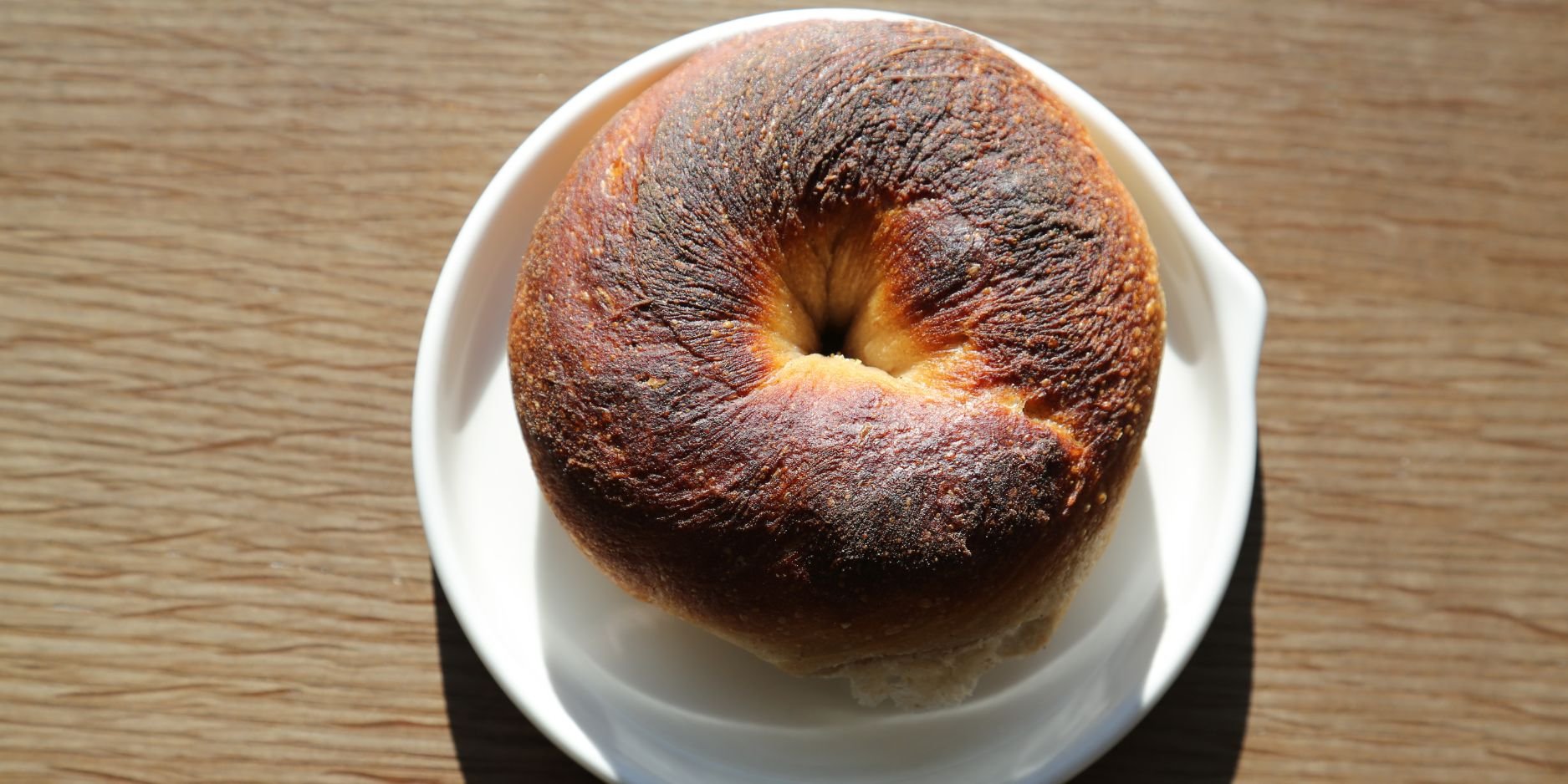
Do you like toast? Of course. Toasted (dare we say, burnt?) marshmallows around a campfire? Grilled zucchini, an eggplant gone soft and smoky on the grill, a steak with a hard sear? Of course.
When you put bread, or anything else, against high, intense heat, something happens that everyone already loves: that deep, toasted, caramel-and-molasses rush. Nobody has ever sent back a perfectly seared rib-eye, or scraped the char off their grilled eggplant.
Yet bread is the one thing off the fire we still expect to come out pale — the only loaf anyone picks up and asks if it's gone too far. We bake it dark for the same reason you sear the steak.
Because…
SAY IT WITH US NOW
Color. Is. Flavor.
So yes: the loaves look a little dark today. They're supposed to!
Come try the one that looks best to you.