
San Francisco
THE LOAF THAT STARTED A MOVEMENT
WHY YOU’LL LOVE IT
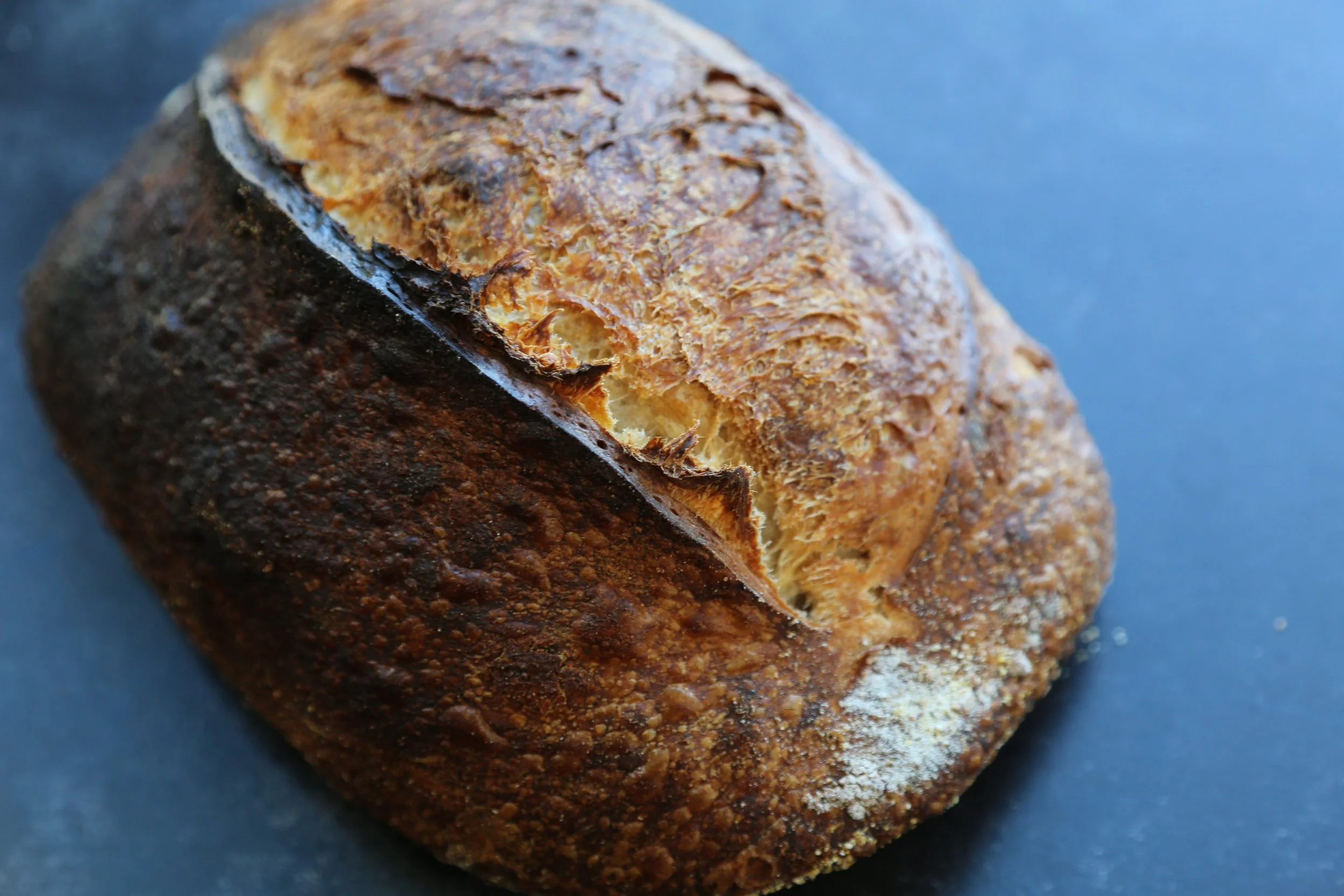
🍞 The Sourdough You're Picturing When someone says "sourdough," this is the loaf that comes to mind.
😴 Slow and Cold The dough cold-retards for up to 22 hours, imitating the cool Bay Area temperatures that helped give San Francisco sourdough its hallmark tang.
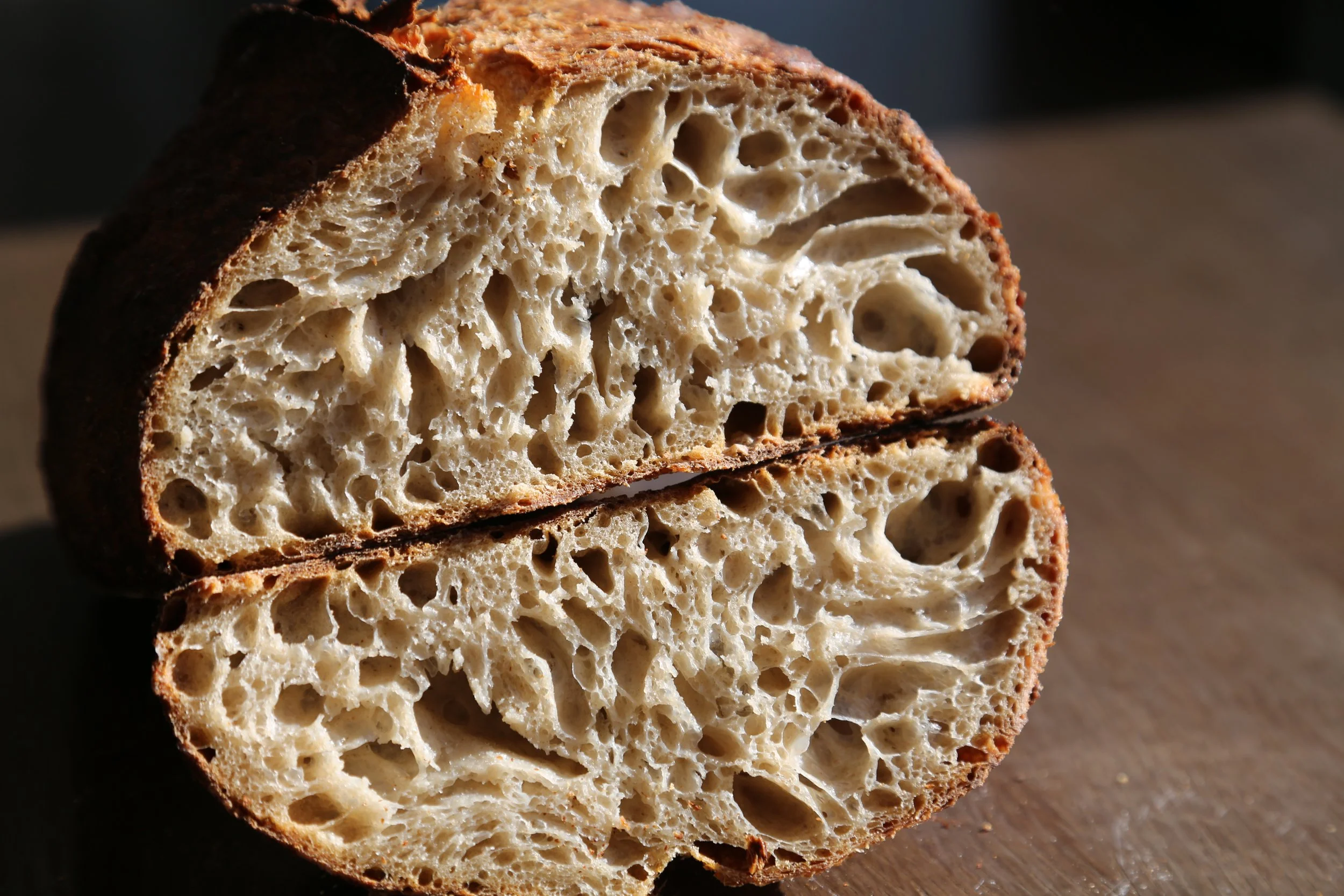
🧈 Straight From the Hearth A rustic, crusty white bread baked on hot stone, giving it a shattery crust, a caramelized base, and an open, tangy crumb.
🇺🇸 A True Classic Our homage to the original sourdough loaf that has inspired generations of American sourdough bakers and enthusiasts.
THE STORY
Like every good American story, it starts with immigrants.
The word "sourdough" didn't start as a way to describe bread. It started as a way to describe people.
French immigrants arrived in San Francisco during the Gold Rush of the mid-1800s. Some opened bakeries — most famously Boudin, founded in 1849, is still around. Others kept moving north, chasing gold into the Klondike.
Those brave prospectors are said to have carried jars of sourdough starter hanging from their belts or around their necks, keeping the culture alive so they could bake wherever they ended up. People started calling them "the San Francisco Sourdoughs."
The name stuck, first to the miners, then to the bread.
What gave that bread its distinctive tang probably wasn't some magic local bacteria. It was likely the cooler climate. Bakers needed to adapt to a new meaning of “room temperature.” They came to rely on cold retardation: long, slow fermentation that builds complexity and acidity. That's where the flavor comes from, and the approach we use in everything we bake.
WHY WE MAKE IT
We often talk about how sourdough is a process, not a product. But when people picture the product, they picture this.
We also think this bread deserves a place on the shelf because of what it represents. It's an homage to how real bread got started in America: not the industrial story, but the one before that. Stories of migration, of adapting to a new environment, and of finding a way to make the food you believe in, somewhere new.
FLAVOR PROFILE & CRAFT
We use a high-extraction white flour — less sifted, more ash content, more of the whole grain left intact — made from a blend of winter and spring wheat that we mix in-house.
We start with an extra-short mix to incorporate ingredients and kick start the gluten development. We basically try to apply hand-mixing sensibility in the mixer. The dough comes out just as it begins to build strength and then continues to develop slowly, through a long warm bulk fermentation.
After bulk fermentation, the dough is divided, shaped, and placed in baskets for cold retardation — 19 to 22 hours. The temperature imitates that San Francisco cool: low fifties, high forties. We’re not trying to freeze the micro-organisms, just slow them down. That extended cold rest is where the tang develops, where the flavors get complex, and, perhaps most crucially, where the baker gets to sleep.
Finally, it hits the hot hearth-oven deck. The radiant heat, paired with a heavy blast of steam in the first few minutes, locks in the crisp, caramelized crust; the rich, tender crumb; and the sweet-tang balance that long fermentation built.
It's white bread for bread people.
HOW TO EAT IT
Grilled cheese. Not the soft, golden, kids-lunch version; that's what our Pain de Mie is for. This is the one where the crust gets shattery in the pan and the tang cuts through the melted cheese. (For a serious upgrade, try adding kimchi.)
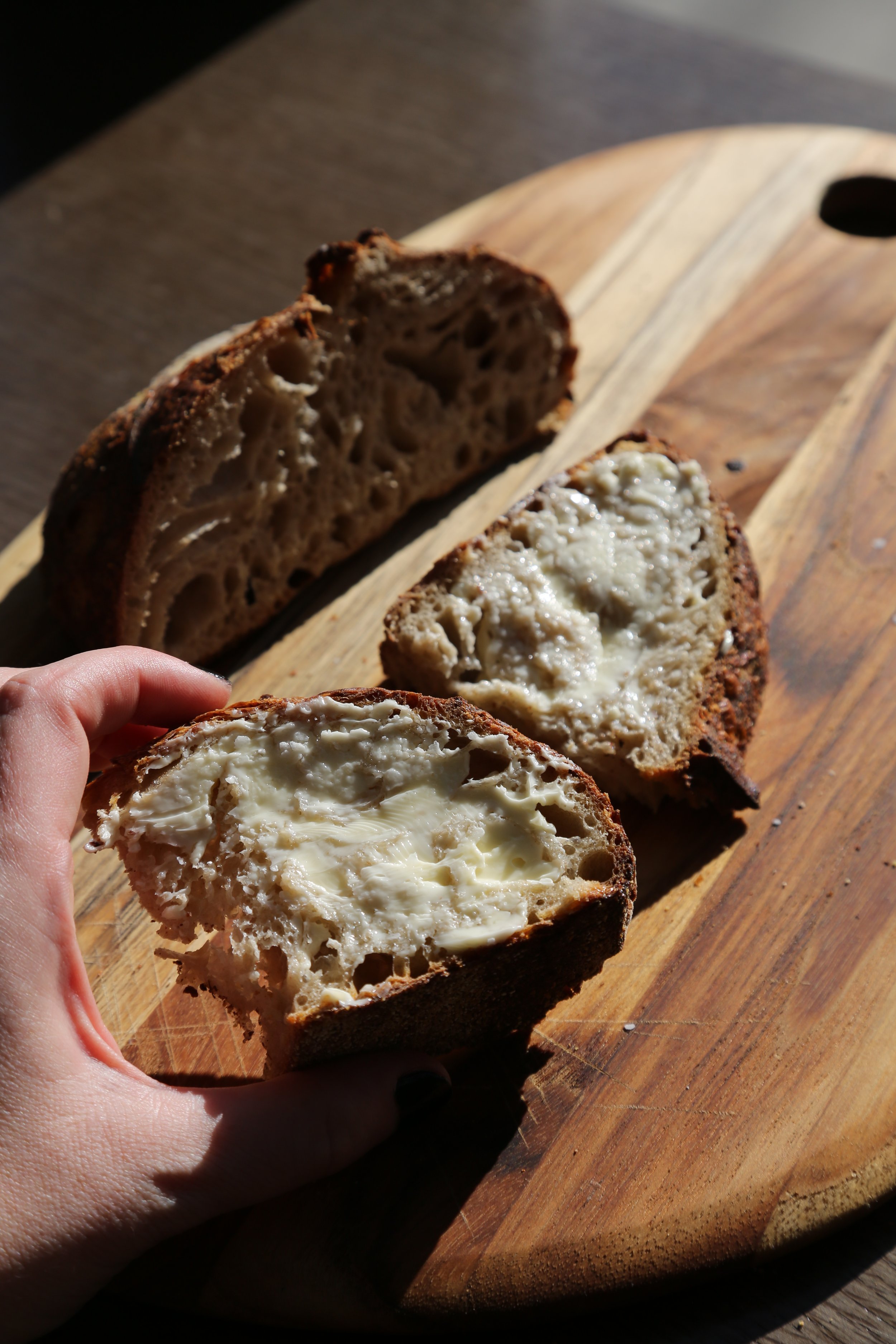
With butter. Really good butter. That's the whole suggestion. A bread this flavorful doesn't need much on top of it — the tang and the crust do most of the talking.
Toast and eggs. The open crumb soaks up a runny yolk without falling apart. A weekday morning loaf. Add avocado under the egg and top with flaky salt, cilantro and lime.
With soup. Hot soup. Cold soup. Chowder. Salmorejo. Doesn’t matter. Whatever is in your bowl, a hunk of the San Francisco is the ideal companion.
HOW TO STORE IT
The San Francisco is at its best the day it's baked. Once cut into, it's good for another 2-3 days; store it cut-side-down on the cutting board, or bag it in plastic and toast when needed.
It also freezes exceptionally well, sliced or whole. Reheat it and proceed with the section above.
WHERE TO BUY IT
You can find the San Francisco every day at our bakery at 685 Grand Avenue in St. Paul; on DoorDash; on Uber Eats; or at one of our neighborhood pickup locations in North Minneapolis (Wednesday), Minnetonka (Thursday) or St. Louis Park (Friday).