
Why we put so much water in our bread
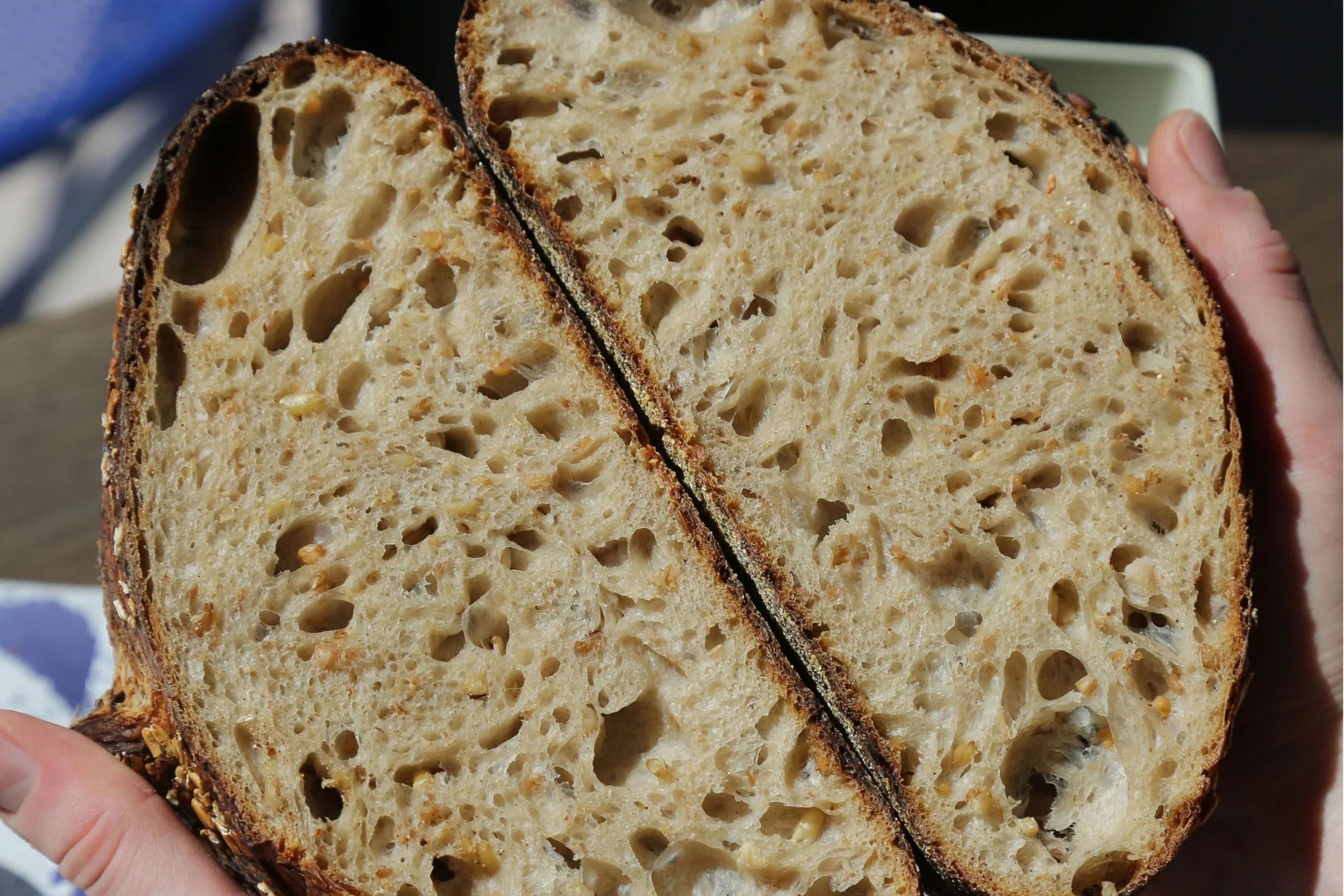
Sourdough bakers like us tend to emphasize the hours of slow fermentation and the billions of microorganisms that help us do something as simple as make bread. But there's another not-so-secret ingredient that's just as important as all those hours and all those microbes. And it pours right out of your faucet.
Water! By weight, it's second only to the flour in breads; in ours, the two together make up about 99 percent of the dough weight.
And we use a lot of it, straight from the city of St. Paul.
Why so much water?
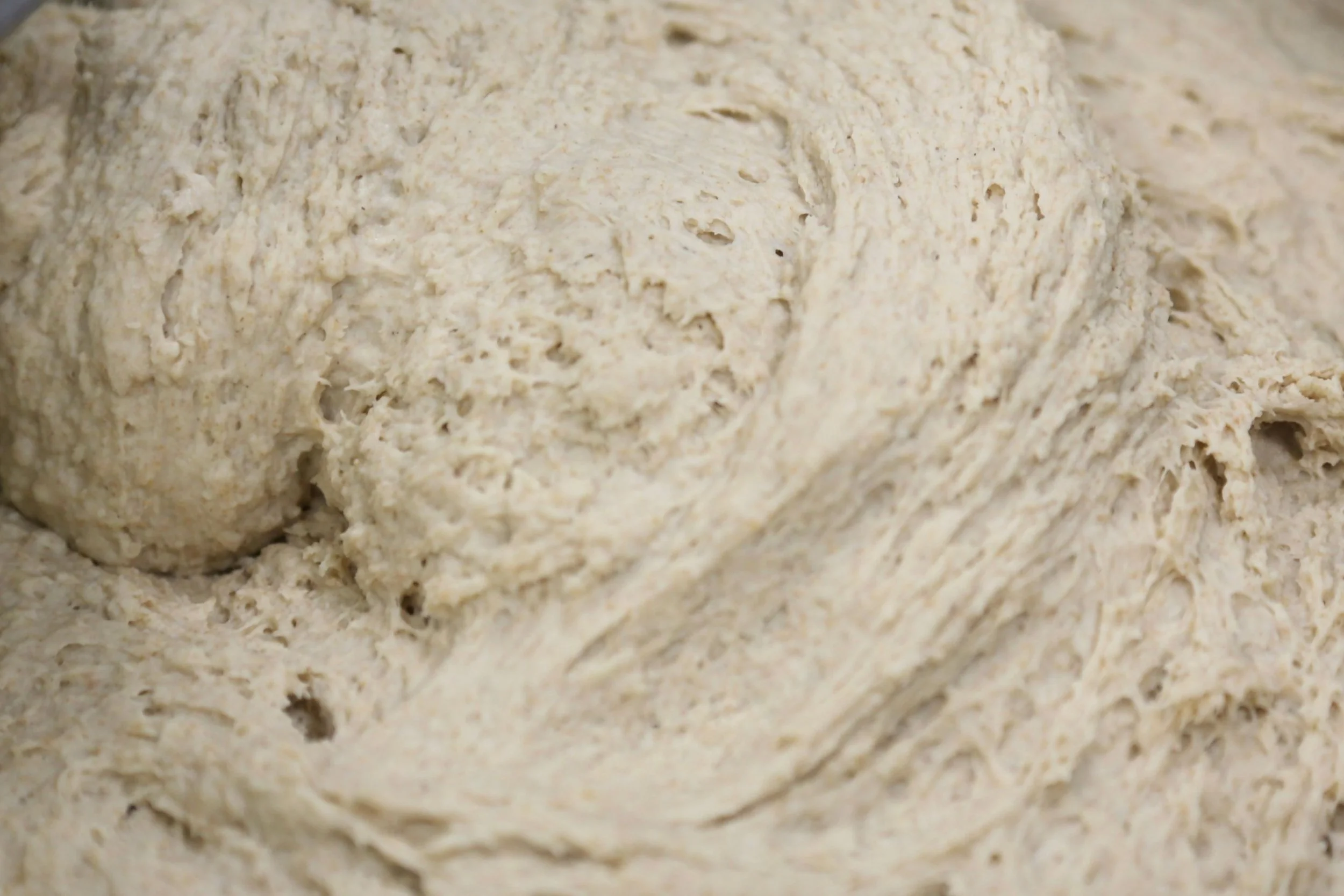
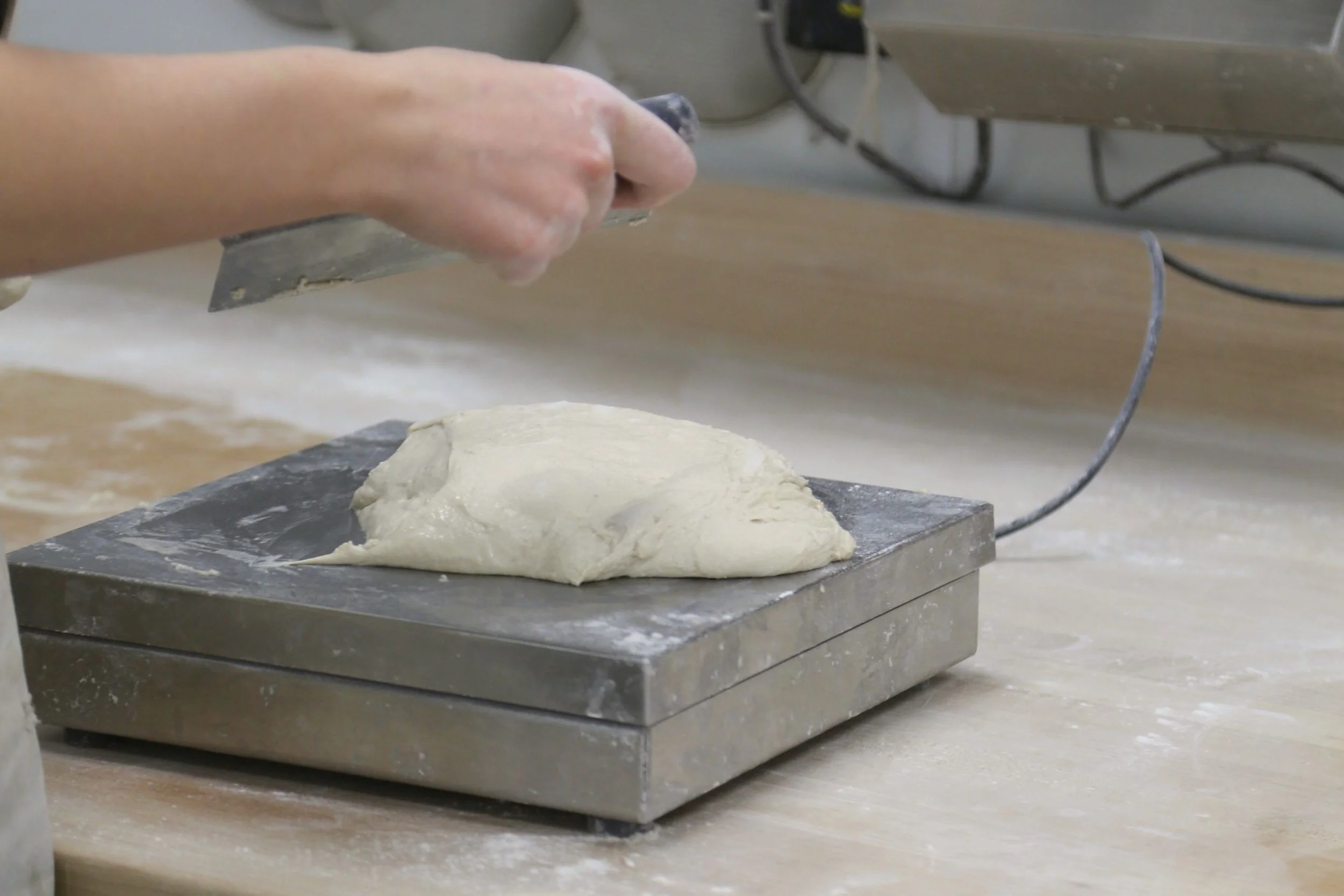
Stand at our bench and the first thing you'd notice is how wet the dough is. That's because we add about as much water as the flour can absorb… and then we add some more. The result is a slack, sticky mess that will do pretty much everything — stick to itself, stick to your hands — except become a loaf of bread. It takes months (or even years!) to learn to do what pioneering sourdough baker Richard Bourdon, of Berkshire Mountain Bakery, once called "the ability to make water stand."
It would be easier to bake with less water. We don't, for the same reason we don't ferment faster or bake shorter: because we think the end result is worth it.
High hydration is why the crumb stays tender, why a loaf keeps on the counter for days, and part of why our crusts come out as dark as they do. Given enough hours, water is a significant contributor to where the flavor comes from.
The part we care about most, though, happens both before the oven and during the bake: grain that has spent this many hours in this much water comes out of the oven fully gelatinized, which makes it easier for your body to digest. More nutritious, too: a properly soaked grain lets your body enjoy the minerals and nutrients it was carrying all along.
We think it's bread you can feel good about eating.
How bread got dry
Who wouldn't want that kind of bread all the time?
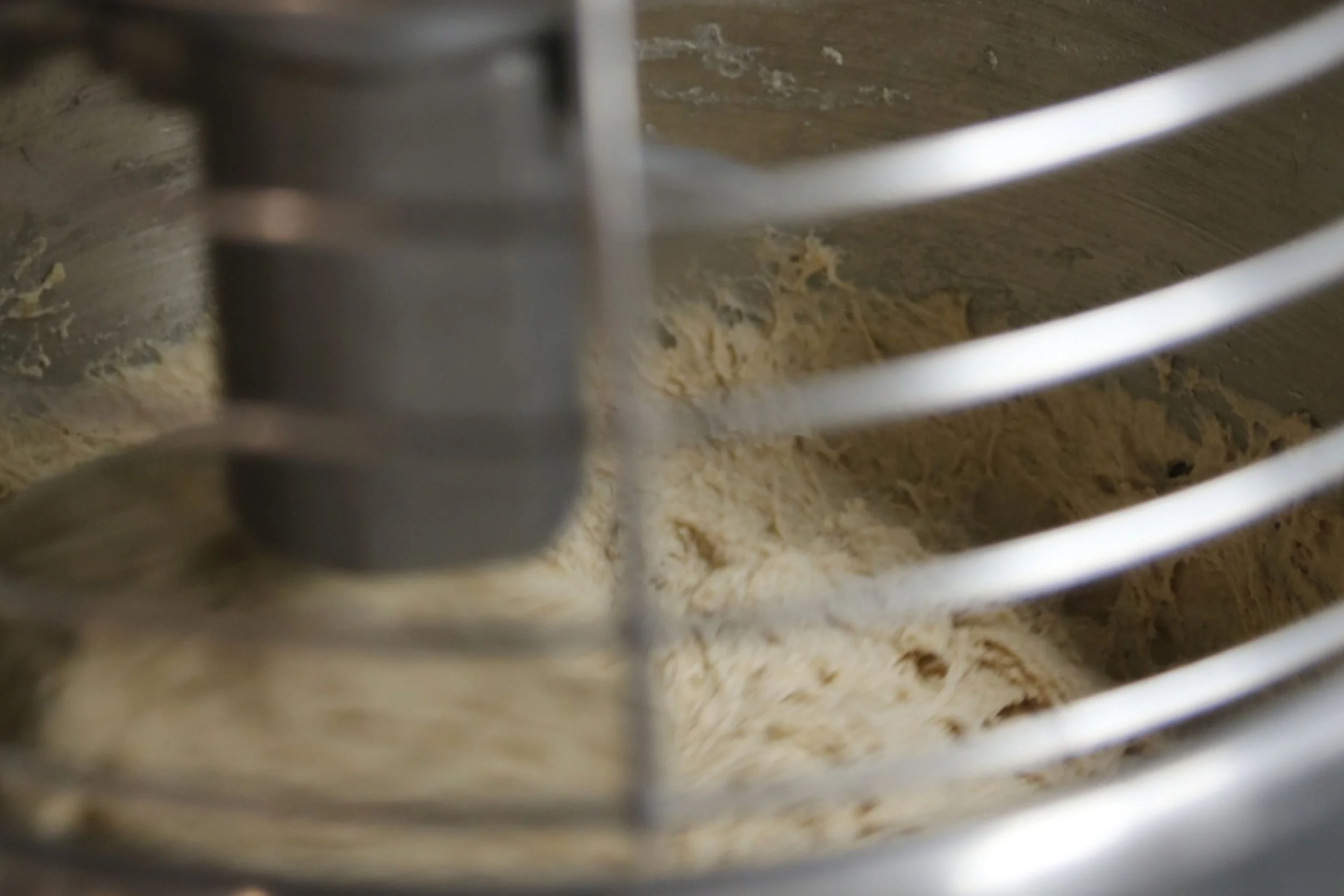
Well, machines for one. Wet, sticky dough is a nightmare for industrial equipment. So as bakeries scaled up, hydrations went down. Firm dough holds a shape on a belt, takes a stamp, and goes through a divider without anybody's hands in it. The trade's own phrase for this is efficient machinability, which is at least honest: the dough is designed to suit the machines.
So the water didn't come out of bread because anyone decided bread was better with less water in the dough; it was just easier to make a lot of it.
Bourdon calls that the biggest mistake in modern bread-making. We agree.
What the water is actually for
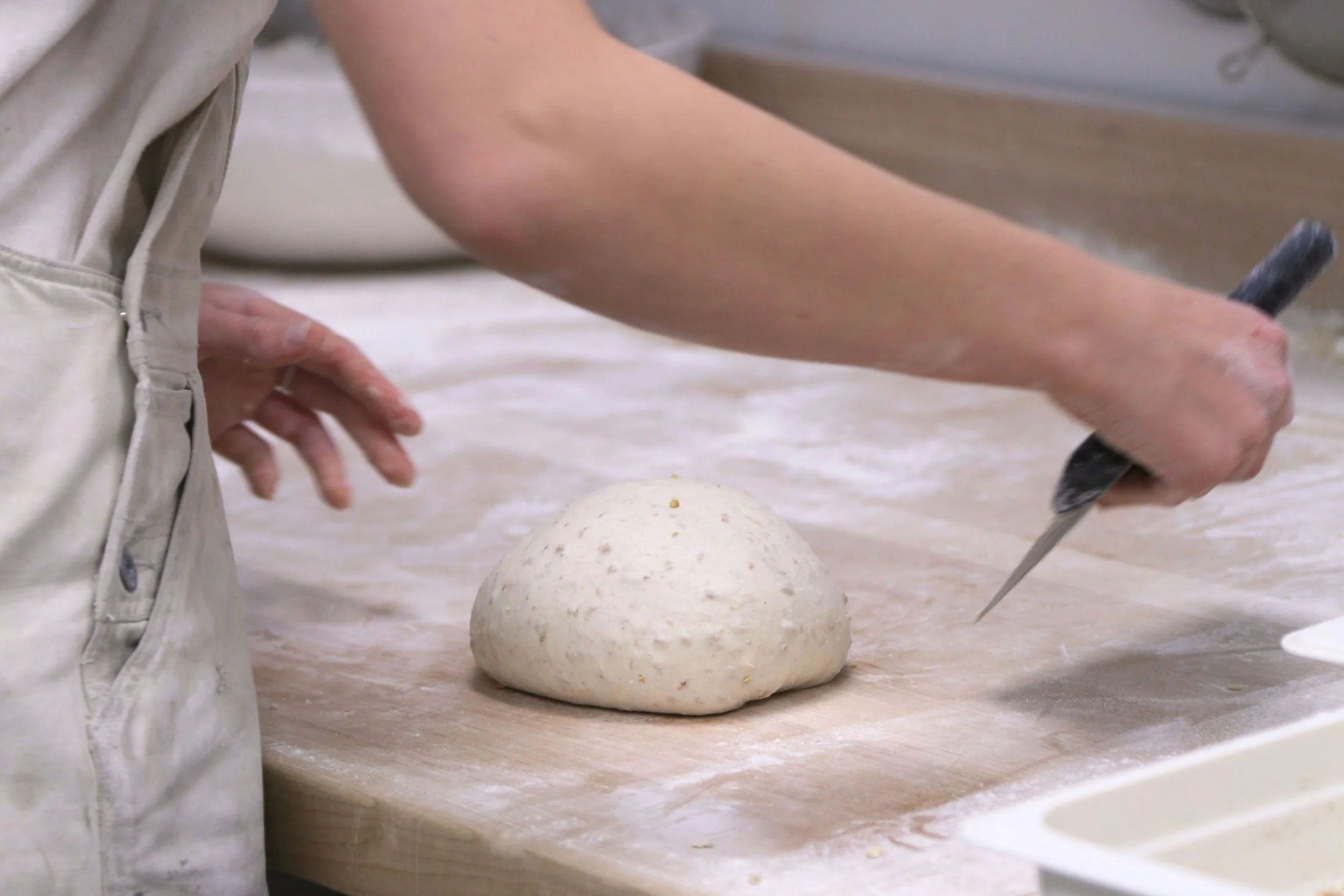
Bread is fermented, cooked grain. Water has a job in both.
Start with the fermenting. Cereal grains carry phytic acid, an anti-nutrient (that's really what they're called) that ties up the minerals in the grain so your body can't reach them, and we don't carry the enzyme to break it down on our own. Two things reduce it: soaking in water, and long fermentation. In a dough this wet, every hour of fermentation is also an hour of soaking.
Then the cooking. There's plenty written about fermentation, Bourdon says, and very little about this part. Cooking, to him, is a matter of how much of the starch gelatinizes while the loaf is in the oven, and that takes the right balance of heat, time, and water. Gelled starch tastes much better than raw starch, and is way more digestible. In a dry dough the starch gels poorly, even though the loaf comes out looking cooked, and it's hard to digest.
Putting the water back
Decades ago, a few bakers started pushing hydrations back up. They understood what the water was doing for the grain, and they thought the bread was worth the harder work at the bench.
The high-hydration school in this country starts with Bourdon. He came to bread through macrobiotics, a food philosophy with a simple test: if a food is taxing on your body, there's no point in eating it — food should be life preserving, not life depriving. For him that starts with enough water in the dough: at least 72 percent for white flour, and 90 for whole grain.
Those numbers are baker's percentages — every ingredient weighed against the flour. An 85 percent dough carries 85 grams of water for every 100 grams of flour; the salt, by comparison, comes to about 2. A dough past 100 percent has more water in the bowl than flour.
How wet is wet enough
Our answer to what's the right amount of hydration is the same as our answer about how long we bake our bread: we hydrate until it's properly hydrated.
That sounds like a dodge until you've stood at a mixer. Flour changes — by harvest, by season, by how long the bag has been sitting, by the humidity in the room that morning. Spring wheat drinks more than winter wheat. Whole grain drinks the most, because bran takes on more water than anything else in the mix. So the hydration written on a formula is more target than definitive answer.
Our hearth loaves run from the high 70s to the high 80s, with the House Loaf and the San Francisco at around 85 percent.
There is such a thing as too much hydration, the same way there's such a thing as too much time for fermentation. It's a bit of a high-wire act: Past the edge the dough can't hold itself up, and it bakes flat, gummy in the middle and leathery outside.
We believe, as did Philippe Petit, the man who walked a wire between the Twin Towers, that if you want to learn the high wire, you have to actually walk the high wire. Not on a lower one, because the experience isn't the same. Death has to be an option. (Overly dramatic for talking about dough? Definitely! But it's a useful metaphor about how we like to live a bit dangerously when it comes to hydration.)
A blanket made out of water
A dough at 85 percent doesn't want to cooperate. It won't hold the shape you give it, won't come off your fingers, and won't wait while you decide what to do next. The cure for the sticking is more water: dough won't stick to wet hands.
Shaping it means trapping a great deal of air inside what is essentially a blanket made out of water, stretching that blanket as thin as it will go without tearing, and working fast enough that the whole thing doesn't slump while you do it. Too loose and it spreads. Too tight and you've pushed the air back out, and it goes into the oven and blows flat.
Where the water goes
Water turns to steam and drives the oven spring, the almost-magical moment when the loaf expands after hitting the hot oven deck. Water is what the starches drink as they gelatinize and set into crumb. Water on the surface keeps the skin soft long enough for the loaf to finish rising, and keeps the enzymes up there working longer, which is part of why our crusts come out in reddish browns and coppers. It’s why the crumb is custardy, and the reason a loaf you bought Sunday is still worth eating Thursday.
Adding more water makes better bread, and it's better for you. Yes, it's harder this way. Yes, we could make more loaves if we didn't have to work this wet, sticky stuff by hand — no, we wouldn't do it any other way.
With thanks to Richard Bourdon of Berkshire Mountain Bakery, whose thinking on water and the cooking of grain runs through not only this piece, but through our bakery.